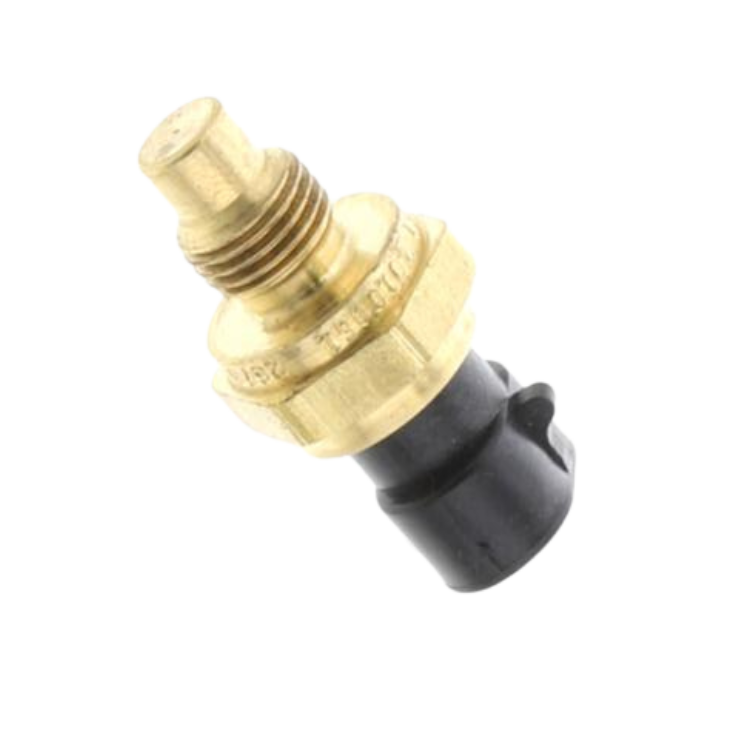

Cummins ISL, QSB, QSL Temp Sensor 2017-2024: OEM 5461628
CUMMINS ISL, QSB, QSL TEMP SENSOR 2017-2024: OEM 5461628


ORDERS PLACED BEFORE 3PM EST WILL SHIP SAME DAY

WARRANTY
1M MILES OR 1 YEAR
PRODUCT DESCRIPTION
This is a New, Tamerx Temp Sensor, Tamerx part number 5461628TX ( OEM Part Number 5461628 ).This part is primarily made for a Cummins ISL, QSB, QSL, production years 2017-2024, and comes with a One Million Miles or One Year Warranty.
OEM NUMBERS
| Primary OEM | 5461628 |
| Additional OEM | 4326876, 5461628, A045R457 |
ADDITIONAL DETAILS
| CONDITION | New |
| UPC / Barcode | 00840490542204 |
| WEIGHT | 1.00 LBS |
SHIPPING OPTIONS
Ship Weight : 1.00 LBS
UPS Ground, 2nd Day Air, Next Day Air
SHIPPING POLICY
Tamerx Diesel Products ships via UPS Ground. Next day air shipping can be arranged for a reasonable price of anywhere from $50.00 - $100.00 depending on the weight of the product and your location. We will do everything we can to make sure that you get the service you need. We understand how important it is to receive your order as quickly as possible.
In most cases Tamerx Diesel Products only needs one address, as long as your product is shipping to the same location as your billing information. In order to eliminate credit card fraud, your billing information must match the credit card you provide.
The terms, conditions, and details of our warranty vary from product to product. Specific warranty details can be found below.
Tamerx provides a replacement warranty on all of our parts. The duration and mileage limitations of the warranty vary by product and are specified on the product's detail page/item listing.
Please note that the warranty covers replacement of the part and the cost of shipping the replacement part to you only. It does not cover any shop, labor, towing, or any similar or related costs. This is not a "money back guarantee".
If you experience a problem with your part or it is not functioning properly, the correct warranty procedure is to call us at (510) 257-1777 (8:00 AM - 5:00 PM ET Monday through Friday). Be sure to have your order number and/or other relevant order information ready so we can easily locate your order and resolve your issue as quickly as possible. From that point, we will review with you any troubleshooting steps that may need to be taken and other areas or systems that can be checked to rule out external problems contributing to your part's issue. If a replacement is determined to be necessary, we will then arrange for your replacement part to ship out ASAP and issue any necessary return shipping labels and/or documents.
As is the case for the majority of the diesel products sold on Tamerx, your part's warranty is active as soon as you install it. In some other cases, warranty activation is contingent upon you sending us your core (i.e., your old part). Tamerx will provide you a return shipping label for parts that have a warranty with a core return condition. When we have received your core return, the part's warranty coverage begins. We reserve the right to void the product warranty if your core is not received within the allotted time, or if it isn't received at all. If the warranty for the diesel part you are purchasing has a core return requirement, it will be clearly noted on the product detail page/item listing.
What is a Core Charge?
A core charge (also called "core deposit") is similar to the deposit you might pay for a can or bottle of soda and is a standard requirement in the auto parts industry. For example, in many states, to promote recycling, you pay a deposit when you purchase a can of soda and receive your deposit back when you return the empty can. Many automotive parts have a core charge, or core price, that works in essentially the same way as a soda can deposit.
30 Day Core Charge Hold
You authorize Tamerx Diesel Products, to hold your credit card for the specified core charge amount and that you agree to return your core with 30 days of receiving the purchased part. When we have received your core return, the hold is released and the core charge payment is canceled.
"This Product Doesn't Have a Core"
Built to support accurate engine temperature monitoring, the Cummins ISL, QSB, and QSL Temperature Sensor (2017–2024) OEM 5461628 is a vital component for maintaining reliable engine and aftertreatment system operation. Manufactured to meet original equipment specifications, it ensures precise compatibility with Cummins ISL, QSB, and QSL diesel engines across the specified model years. This temperature sensor continuously measures operating temperatures and relays accurate data to the engine control system, helping support proper fuel management, emissions control, and overall engine functionality. Constructed from durable, high-quality materials, it is engineered to withstand high temperatures and the demanding conditions of heavy-duty diesel applications. Ideal for fleet operators, technicians, and maintenance professionals, this OEM temperature sensor helps maintain consistent system operation and long-term reliability.
FITMENT CHART
| YEAR | MAKE | ENGINE(S) | ||||
|---|---|---|---|---|---|---|
| 2017 | Cummins | ISL | QSB | QSL | ||
| 2018 | Cummins | ISL | QSB | QSL | ||
| 2019 | Cummins | ISL | QSB | QSL | ||
| 2020 | Cummins | ISL | QSB | QSL | ||
| 2021 | Cummins | ISL | QSB | QSL | ||
| 2022 | Cummins | ISL | QSB | QSL | ||
| 2023 | Cummins | ISL | QSB | QSL | ||
| 2024 | Cummins | ISL | QSB | QSL | ||
PEOPLE ALSO ASKS | BLOG(S)
The Cummins ISL, QSB, QSL Temperature Sensor (OEM 5461628) is an essential engine monitoring component designed for 2017–2024 Cummins ISL, QSB, and QSL engines. This sensor continuously measures temperature within the engine or aftertreatment system and sends real-time data to the Engine Control Module (ECM). The ECM uses this information to monitor operating conditions and help ensure various engine and emissions components function correctly.
By providing accurate temperature readings, the sensor helps the engine management system make informed adjustments that support efficient operation and proper emissions control.
What Does the Cummins 5461628 Temperature Sensor Do?
- Monitors system temperature
- The sensor continuously measures temperature and provides accurate data to the ECM for real-time monitoring.
- Communicates with the Engine Control Module (ECM)
- Temperature readings are transmitted to the ECM, allowing it to monitor engine and aftertreatment operating conditions.
- Supports aftertreatment operation
- Accurate temperature information helps ensure emissions components operate within their intended temperature ranges, supporting proper aftertreatment performance.
- Assists in diagnostic monitoring
- The sensor enables the ECM to detect abnormal temperature conditions and store diagnostic fault codes when necessary.
- Supports efficient engine operation
- Reliable temperature feedback helps the engine management system maintain proper operating conditions across varying workloads.
- Contributes to emissions compliance
- Consistent temperature monitoring helps the engine and aftertreatment system function as designed, supporting compliance with modern diesel emissions standards.
The Cummins ISL, QSB, QSL Temperature Sensor (OEM 5461628) serves as a vital source of information for the engine's electronic control system. By delivering precise temperature data, it helps the ECM monitor critical operating conditions, supports efficient engine and aftertreatment operation, and contributes to the long-term reliability of compatible Cummins ISL, QSB, and QSL engines.
In most cases, a faulty temperature sensor is not repairable and should be replaced. Temperature sensors are sealed electronic components that measure the temperature of engine fluids or exhaust gases and send that information to the engine control module (ECM). Once the internal electronics fail or the sensor becomes damaged, replacing it is typically the most reliable solution.
However, not every temperature sensor issue means the sensor itself has failed. Related components should also be inspected before replacing the sensor.
Here are the steps to determine whether the problem can be resolved without replacing the sensor:
- Inspect the wiring and connectors
- Damaged wires, loose connections, or corrosion at the electrical connector can interrupt the sensor's signal and create symptoms similar to a failed sensor.
- Check for contamination
- Dirt, oil, soot, or debris around the sensor may affect its readings. Cleaning the surrounding area can help if contamination is preventing proper operation.
- Scan for diagnostic trouble codes
- Reading fault codes can help determine whether the issue is caused by the sensor itself or another component in the system.
- Test the sensor
- A technician can compare the sensor's readings with manufacturer specifications to confirm whether it is operating correctly.
- Replace if internal failure is confirmed
- If the sensor no longer provides accurate readings or has failed electrically, replacement is the recommended repair.
- Inspect related components
- Cooling system issues, exhaust system problems, or damaged wiring harnesses can also trigger temperature sensor faults and should be addressed during diagnosis.
Replacing a faulty temperature sensor promptly helps ensure accurate temperature monitoring, supports proper engine operation, and can prevent more serious engine or emissions system issues from developing.
It monitors exhaust system temperatures and sends real-time data to the engine control module (ECM) to support proper engine and aftertreatment operation.
The 5461628 temperature sensor is designed for Cummins ISL, QSB, and QSL engines used in a variety of heavy-duty on-highway, industrial, agricultural, and construction applications built between 2017 and 2024.
Its primary function is to measure exhaust gas temperature and provide accurate temperature data to the ECM, allowing the engine to properly manage emissions-control strategies and aftertreatment performance.
The sensor is installed at a designated location within the exhaust or aftertreatment system, where it continuously measures exhaust temperatures as gases flow through the emissions components.


Cummins Temp Sensors