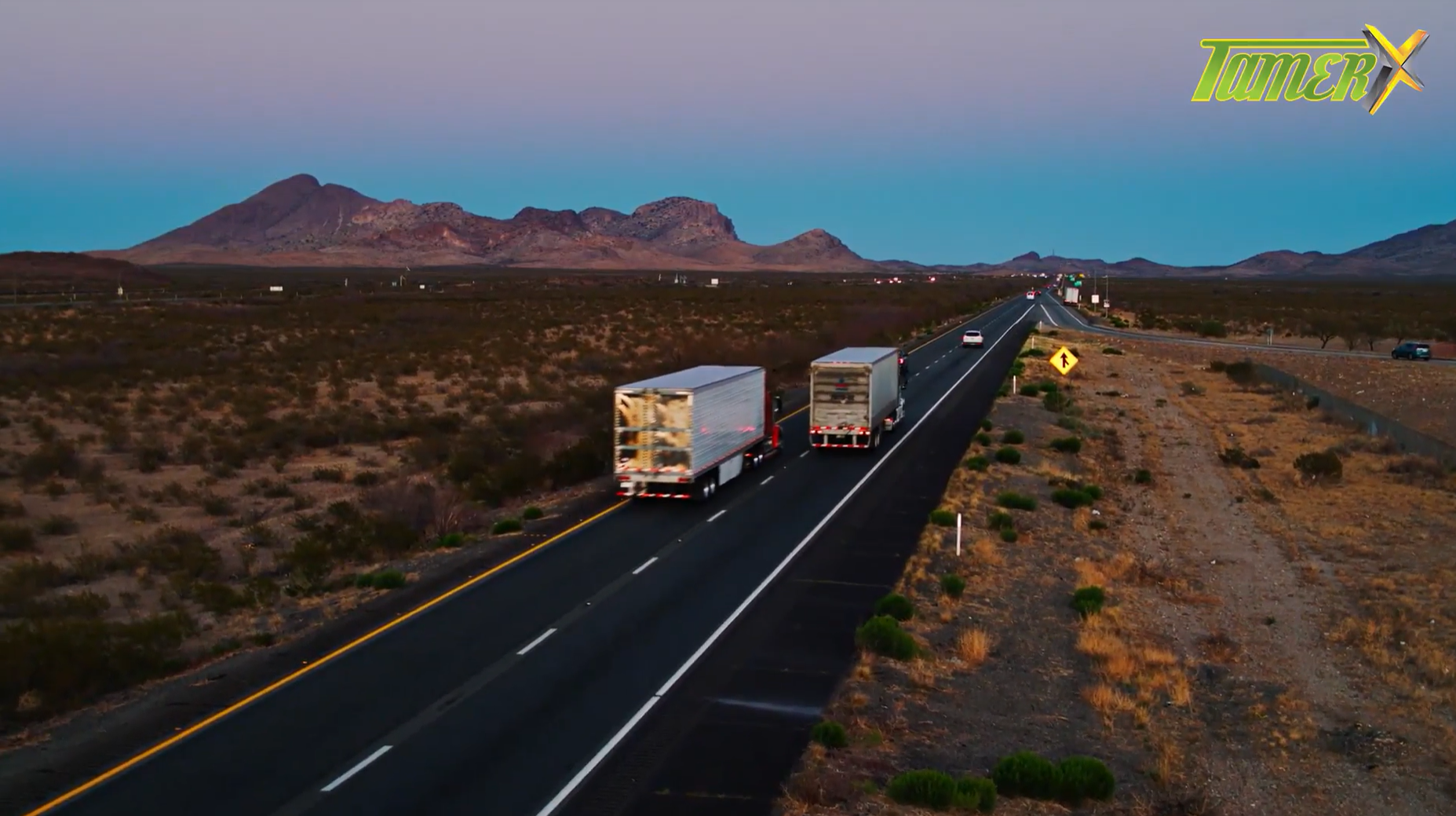
ROAD TEST: MACK’S MP7 ENGINE

MACK'S MP7 Engine Road Test
The fundamental parts of the engines, including the block, pistons, crank, gear train, camshaft, etc., were meant to be largely interchangeable. The fluctuations would originate from the ECM, or electronic control module, of the engine. "The variations would be more noticeable than the similarities," was the advice we received.
I'll let you know. They were right.
I examined a Mack MP7 engine and can attest that it still has the legendary Mack grunt at the low end of the power band and an incredibly smooth upshift from torque to horsepower. In addition, the lower the rpm, the harder it pushed up a hill. Do you think that sounds like a Mack or not?
The sound and the fact that the rpm fall much more quickly when shifting up were the only things that, in my perspective, distinguished a Mack engine from other engines. Throughout the drive, this minute difference caught me off guard multiple times.
Due to my lack of driving expertise, I am unable to compare the personalities of the 10.8-liter Volvo D11, the MP7's green opponent. I can, however, say with certainty that Mack has created an engine that will entice all Mack lovers.
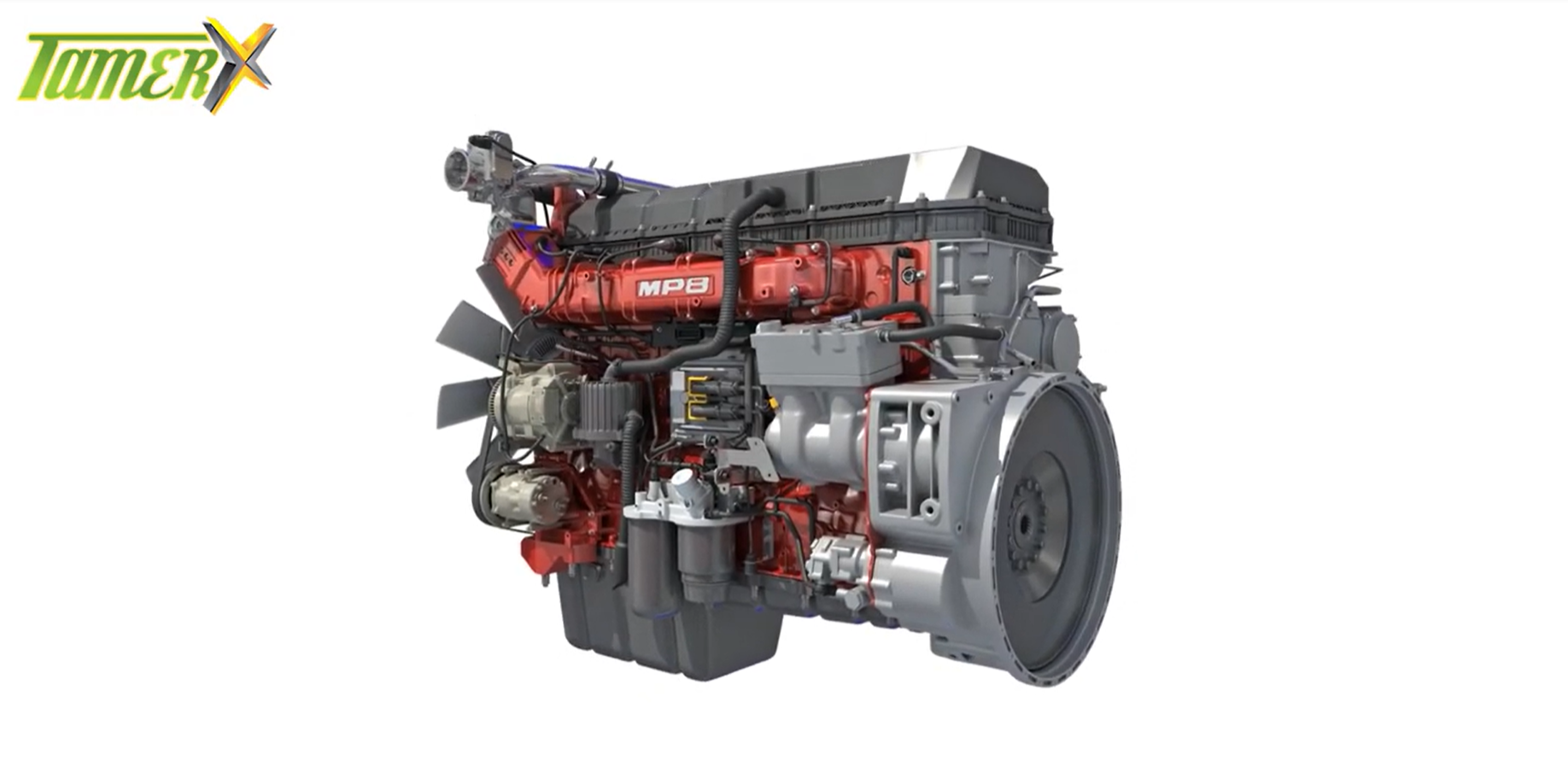
The Engine
The Mack engineers Win Pelizzoni and Walter May developed the Maxidyne constant-power profile in 1967. It had excellent torque at low rpm and a smooth increase in horsepower (relatively speaking: 237 hp, 860 lb ft at the time). The electronic engine controls for the MP7's V-MAC IV by Mack were successful in keeping that profile.
Mack's camshaft, which is crucial to how the engine feels and functions, has a significant impact on the engine's personality and performance (valve timing, etc.).
Furthermore it is free of any flaws that prospective buyers might be worried about, such broken turbocharger vanes and coolant leaking back through the radiator cap and out of the surge tank.
I would be keeping a close eye on the product if I were a Mack customer, but I can assure you that we have completely modified the design, making it physically impossible for the earlier issues to recur, says Mack powertrain products marketing manager Dave McKenna. "If anything, we were oversensitive to these and other concerns.
We chose to replace the previous turbo with a stepped-vane variable geometry turbo since we knew it would last a very long time and work better when the engine slows.
McKenna asserted that the Vision chassis's plumbing, rather than the ASET engine's, was the primary cause of the coolant issues. But the issue has also been fixed, in large part because to the company's Advantage highway chassis.
In fact, Mack will be delivering a cooling solution. The 1,380 square inch Pinnacle variants will have a radiator positioned on the engine that has extremely effective fan rings and shrouds. A 32-in. There will be three types of conventional fans available: on/off, E-Viscous, an electronically modulated fan, and strong multi-speed fans with lockable on/off switches.
There will be rad-mounted expansion tanks, cross-flow charge air coolers, coolant piping, air intake piping, and power steering coolers installed. For greater circulation, the ventilation under the hood has also been increased.
3 Power Profiles
Three distinct power profiles, or performance levels, have historically been offered by Mack for its engines. Maxidyne (1,200 rpm - 2,100 rpm) provides the power for high-performance, severe-duty circumstances, notably off-road applications, while MaxiCruise (1,200 rpm - 1,950 rpm) provides the performance needed for rolling interstate and full-load applications. For regular interstate and less-than-full load operations where fuel economy is a priority, Econodyne (1,200 rpm–1,800 rpm) is ideal.
The Econodyne profile was what the engine I used had, which McKenna admits isn't the one he'd pick for the hills of West Virginia. Given its even wider power spectrum, the Maxicruise profile would have been a better fit for the application we drove in, but that doesn't detract from how well the Econodyne performed, he says, "but if it works well there, we're doing something right." It did a great job.
The Mountains
Remember that there may have been three opportunities throughout the day to go at a legal 60 mph on flat ground, making the ASET engine's higher horsepower somewhat superfluous. Because slopes require torque, the smaller MP7 outperformed the ASET by a wide margin (1,460 peak torque at 1,300 rpm vs. 1,560 peak torque at 1,100 rpm).
The driver will experience greater pulling power over a wider range of rpm as a result. Every time we rounded a small, tight turn, we started to ascent. You simply place your foot on the ground and let gravity carry you up a hill when there is nowhere to run.
To its credit, the MP7 was able to successfully negotiate the majority of the climbs in sixth or seventh gear thanks to the Maxitorque ES T313 13-speed. Since acceleration was regularly possible during the climb but an upshift wasn't, I can tell the engine is well suited to the terrain it was operating in.
We traveled 452 miles in a single day, with the engine running between 180 and 205 degrees F, at or near its maximum torque, except when we were descending slopes. And under those conditions, Mack's PowerLeash engine brake performed admirably.
Despite having a very small 10.8 L displacement, PowerLeash nonetheless generates 400 lagging horsepower at 2,100 rpm. The fan was programmed to turn on as well, adding about 50 horsepower to the retarding system's capacity. We often, if generally lightly, engaged the brakes that day.
I might have thought the MP7's 395-hp engine was underpowered for the job if I had known what kind of driving conditions I would be dealing with that day before I got behind the wheel. And I'm sure that others will think the same way. Thanks to the wonders of electronics and the Holset variable geometry turbocharger, an 11-liter engine can manage 80,000-lb loads quite successfully on eight percent grades. It's more powerful than you may imagine for such a tiny motor.
These days, torque truly reigns supreme. Forget about that; excessive fuel consumption is merely another way to say horsepower. If properly geared, I believe the 1,560-ft-lb MP7 will operate at least as well on the Interstate as it did in the Appalachians, where it excelled. Do not let the small box fool you.