The International ProStar with Allison TC10 transmission

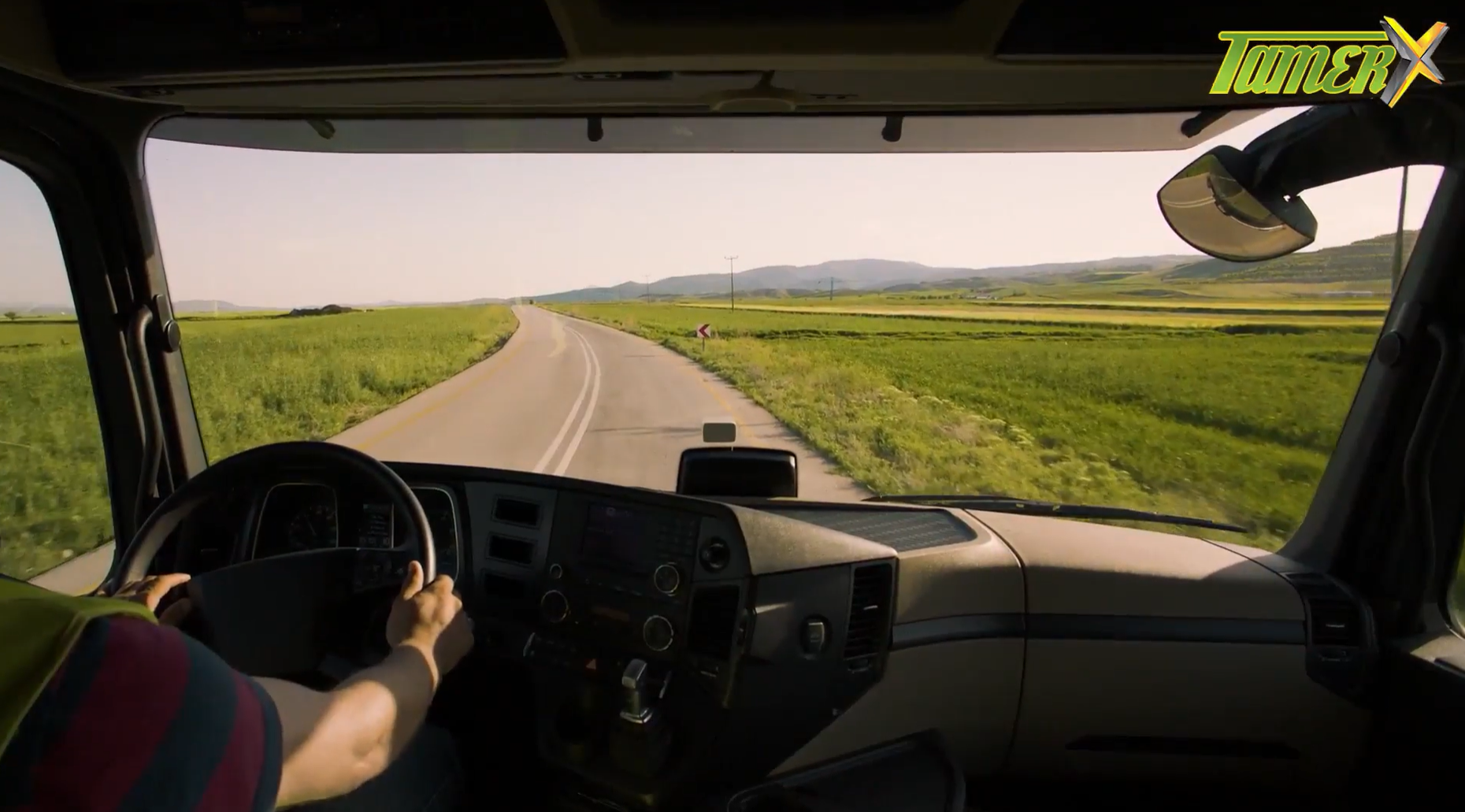
An Inside Look at the Allison TC10-equipped International ProStar
4,750 dollars. That is the cost of replacing the manual transmission on a five-ton straight truck. All expenses over $4,000 need the CEO of the Erb Group of Companies, Wendell Erb, to give his approval. Enough of these bills have crossed his desk to permanently and horribly etch that amount into his consciousness. Even though Erb hasn't had to repair one yet, the need prompted him to start specifying Allison automatics in the company's straight trucks.
Therefore, it should come as no surprise that Erb has also been gradually automating its heavy-duty fleet. That Erb is among the first to receive Allison's TC10 TS automatic transmission should also come as no surprise. The letters TS stand for tractor series, TC for torque converter, and 10 for the possible forward speeds. It makes sense for Allison to make this initial foray into the Class 8 tractor industry. Allison transmissions are widely employed in the medium-duty and vocational industries as well as some of the most demanding heavy equipment applications.
Even if on-highway market automation is a trend that isn't going away anytime soon, it won't be easy to conquer. Since automated manual transmissions (AMTs) have significantly improved recently, some OEMs could be hesitant to introduce an AMT that competes with their own AMTs. Initially, Allison's TC10 will only be available for purchase with International ProStar and TranStar tractors powered by the MaxxForce 13 engine. It can handle 600 horsepower and 1,700 lb-ft of torque and has a current GCW limitation of 80,000 lbs.
The potential fuel savings excite Jim Pinder, corporate fleet director, and Wendell Erb, CEO of the Erb Group. According to Allison, these savings over automated manual transmissions currently on the market in regional-haul applications with frequent stops and starts might be as high as 20 percent.
Along with Joe Mitchell from Altruck International, Tom Boehler, the safety manager for Erb, served as my local advisor and made sure I took exceptional care of their truck. John Kay, the regional sales manager for Allison, gave me an overview of the product. I couldn't injure the TC10 even if I were a cowboy driver, which I am not. To prevent motorists from harming others, it has several layers of defense measures in place. Simply said, if you try to do something that would damage the transmission or other downstream components, the TC10 will take precedence over your bad choice. This is a key reason Allison's transmissions are known for their longevity.
The TC10 is foolproof—possibly even bulletproof—but the driver still has the freedom to select their own gears when it seems right. On my trip, there were no circumstances that would have supported trying to trick the transmission, and I have a hunch that there aren't many in everyday driving circumstances either. Its built-in inclinometer and grade sensor make it fairly adept at choosing the necessary equipment, even on hills.
There are two numbers on the shift pad. The gear on the right displays your current gear, and the gear next to it displays how many gears are currently available. This should deter drivers from attempting to choose the erroneous gear in the first place. The two numbers are shown so tightly together that it takes some getting used to, and it can hold your attention for an additional little period when you look down to check what gear you're in. I'm not sure if the second number is actually required, but you get used to it pretty quickly.
The Allison TC10's automatic transmission
The up and down arrows on the keyboard may be used to manually shift in the model I drove. A Mode button gives you a temporary boost in rpm when you need to complete a pass, keep moving up a steep slope, or quickly accelerate from a stop to highway speeds. I had numerous opportunities to use this feature—which can be a touch addictive—during my drive. It enhances performance but does not increase fuel efficiency; as a result, it is advised to only use it when absolutely essential. After the novelty wears off, drivers will probably use it more responsibly than I did. Another useful feature is the ability to check the transmission fluid level from the cab. The LED indicator will flash when you click the button to indicate if extra oil is required or not. I confirmed that the oil level was sufficient by doing this again while the engine was running.
The TC10 will need to achieve this in order to be broadly accepted by the market, given its higher price point and the fact that it was created to outperform today's automated manual gearboxes. According to Kay, the TC10 will be more dependable and efficient with gasoline than a typical AMT.
The TC10 performed quite well. According to Kay, a truck with an automatic manual can reach 55 mph from a stop in about 18 seconds less time with a TC10-equipped vehicle. With a full load weighing about 80,000 pounds and frequently leaping out of third gear, we quickly achieved highway speeds. I was able to ride on the 401 with ease, comfort, and quietness by cruising at 100 km/h, or about 1,150 rpm.
The TC10 has ten forward speeds thanks to a two-speed range pack and a five-speed main box. A torque converter replaces the clutch and flywheel in an AMT configuration. The two reverse speeds provide drivers more alternatives when pulling up to a pier. Compared to automated manual transmissions, which face a torque interruption each time they shift gears, torque converter-style automatic transmissions allow for smooth power shifting for increased efficiency. The car's ability to accelerate more quickly is due to this. When traveling in top gear on the interstate, Kay admits that the TC10 won't be significantly more fuel efficient than an AMT in a low-rpm engine, but he asserts that it will provide fuel savings in regional haul circumstances when more shifting is required.
Even while the hardware of the TC10 appears to be a reliable, well-engineered piece of gear, the software calibrations really make it glow. For maximum fuel efficiency, the transmission comes standard with FuelSense Max calibrations and Allison's fifth-generation electronic controls. These programming components allow the transmission to adapt its functioning based on a variety of conditions, such as the terrain, the load, and even the driver's driving style.
In contrast to other torque converter-style automatics, the TC10 shifts into complete neutral while the vehicle is still moving, which lessens the stress on the engine and provides extra fuel savings. Although the TC10's output drive is internally locked to prevent rollback on slopes, this feature is not connected to the vehicle's anti-lock braking system (ABS), which, in Kay's opinion, is advantageous because brake issues with the vehicle won't impair its ability to hold a hill.
Drivers will notice that the TC10 begins to saunter forward as soon as the brake is released. Even though it's not a problem, if you're used to driving an AMT, which won't begin moving forward until the throttle is pushed, you should be aware of it.
Although AMTs are more sophisticated than ever, according to Boehler, they still have a number of shortcomings that he thinks the TC10 will resolve. For instance, it has been noted that trucks using AMTs may have wheel slide when the torque is lost during a shift in slick conditions as the truck approaches a stop. This causes the speedometer to increase before rapidly decreasing, which the Qualcomm logs as a hard-braking incident. This has provoked some interesting discussions with drivers.
"This (TC10) delivers continuous torque so you don't get the slip during the transition," Boehler explains.
The reliability of the TC10 is generally good, and it comes with a five-year, 750,000-mile guarantee. Really, the only disadvantage would be that it would be more expensive and heavier than existing AMTs. Kay has a remedy for both of those complaints.
According to Kay, the cost premium, which is ultimately chosen by the OEM, will be quickly recouped if fuel savings of 5 percent or more are achieved. Pinder confirmed that the purchase cost of the TC10 becomes more manageable for forward-thinking fleets like Erb that are concerned with total cost of ownership when fuel savings are realized throughout the component's lifetime. Kay acknowledges that the TC10's 1,074 lbs. of weight make it possibly 250 lbs. heavier than contemporary AMTs. Erb's second choice engine, the ISX15, weighs more than twice as much as the MaxxForce 13, therefore picking the former results in weight savings.
Gross combination weights of up to 80,000 lbs are permitted for the TC10. This is ideal for most of Erb's routes, while certain clients might want to hold off till GVWR of 110,000 lbs. According to Kay, the TC10 may someday be authorized for greater payloads even though it is now being offered at the US standard 80K. Most contemporary Class 8 tractor gearboxes are like this.
Erb will keep a careful eye on the TC10's fuel effectiveness. Pinder stated that he tracks fuel mileage using gasoline tax data to balance out the various levels of "optimism" seen in ECM readings. The transmission performs superbly and is certain to be well-liked by drivers. If it provides a fuel efficiency advantage over other products and can quickly pay for itself, it might establish itself as a prominent competitor in the Class 8 on-highway tractor industry.